
Somerset Parole and Probation Compared
Maryland uses several forms of supervision, and each points to a different source record. Parole is conditional freedom during the unserved part of a state prison sentence after action by the Maryland Parole Commission. Probation is ordered by a judge. It may follow a jail term, follow a suspended part of a sentence, or replace incarceration. Mandatory supervision begins when sentence credits move a state prisoner into the community before the maximum expiration date. It is statutory supervision, not a parole grant.
That distinction matters in Somerset County. A probation order does not prove that someone left the Somerset County Detention Center or Eastern Correctional Institution. A parole approval also does not prove that a person walked out that day. The Commission may require a home plan, treatment, or another program before release. The court order, Commission action, and actual custody record must be read as separate facts.
| Supervision type | How it begins | Best verification record |
|---|---|---|
| Parole | Commission action during an unserved prison term | Commission decision plus DPSCS release record |
| Probation | Somerset court sentence or order | Court docket and probation order |
| Mandatory supervision | Release advanced by sentence credits | DPSCS release record and supervision record |
- Discharge
- The legal end of a custody or supervision term.
- Abatement
- A change in active reporting after earned supervision reductions; the legal term may still remain open.
- Absconder
- A person alleged to be willfully evading supervision, not merely someone who missed one appointment.
- Retake warrant
- An order that can return a supervised person to custody for an alleged violation.
Verify Somerset Post-Release Supervision
No public Maryland search found in the research accepts a name and returns every parole or probation client. The Maryland Judiciary Case Search can supply a case number, sentence, probation entry, and later docket events. Parole requires a Commission decision or order. The local Division of Parole and Probation office then confirms whether it is the responsible office and explains what status details may lawfully be disclosed.
- Identify the person carefully. Gather the full legal name, date of birth, Somerset court case number, and SID or DOC number when available.
- Read the Somerset court docket. Look for the sentence, suspended time, probation term, violation entries, and any later order changing supervision.
- For parole, obtain the Maryland Parole Commission decision. Separate approval, a planned date, and actual release because they may occur at different times.
- Contact the Princess Anne field office. State whether the inquiry concerns parole, probation, or mandatory supervision and ask for the public verification process.
- Confirm custody movement separately. A release record from SCDC or DPSCS answers whether the person actually left that custodian.
The full released-person search and county record route is available through the Somerset County released inmate lookup. That path helps reconcile a supervision claim with the court and custody event instead of treating either record as complete by itself.
Note: Ask for an existing public record or verification process, since staff may not disclose residence, treatment, victim, or officer-safety information.
Somerset Supervision Office Details
The official DPSCS field-office directory lists the local office in Princess Anne. It handles the county connection for Division of Parole and Probation matters. The research did not verify public lobby hours, so no schedule should be assumed. Call before traveling and ask what identifiers or written request the office requires.
Division of Parole and ProbationPrincess Anne Field Office
11670 Somerset Avenue
Princess Anne, MD 21853
Phone: 410-651-2211
Fax: 410-651-2193
Provide a case number or SID/DOC number when possible. A common name alone may identify the wrong person. The office can also clarify whether another field office has the case. It may limit person-specific details even when it confirms the correct route, because a supervision file can contain protected personal, treatment, safety, or victim material.
Somerset Violations and Absconder Records
Conditions depend on the court order, Commission action, and supervision type. They may include reporting, approved residence, program participation, payment duties, or limits tied to the case. A violation allegation is not the same as a final finding. A supervising officer may report an issue, but the court or parole authority controls the legal response. A retake or violation warrant can place a person back in custody, which creates a new custody event that must be checked with the holding agency.
Maryland law gives “absconding” a narrow meaning. Under Correctional Services § 6-101, it means willfully evading supervision, and one missed appointment by itself does not meet that definition. Somerset County has no verified public name-based absconder list. A failed phone check, an old address, or absence from a jail roster therefore cannot support that label.
VINE may provide a custody or supervision-related alert where the participating record supports it. It remains an alert system, not a final violation ruling. Confirm any new arrest or return to custody with the agency that holds the person, then read the court or Commission record for the legal outcome.
Note: Preserve the exact terms used by an agency, since “wanted,” “violation alleged,” and “absconding” do not mean the same thing.
When Somerset Supervision Actually Ends
Active reporting can change before the legal term ends. Maryland permits certain eligible and compliant supervised people to earn reductions under Correctional Services § 6-117. The statute describes a reduction of active supervision or home detention for each compliant month, with offense-based limits and exclusions. Once time and credits satisfy the active phase, DPP may place an eligible person on abatement.
Abatement is not always discharge. Routine reporting and supervision-fee duties can change while the legal expiration date remains in the future. That is why “not actively reporting” is weak evidence. A sound Somerset County verification asks for the supervision type, current legal status, expiration or discharge record, and any court or Commission order that changed the term.
The Maryland Public Information Act allows access to public records but also protects categories of personal and investigatory material. A request should name the existing discharge, order, or public status record sought. It should not demand a new report. Missing data can result from restricted access, correction, or a system that never covered the person, so absence should never be turned into an accusation.
Somerset Parole Hearing Records
The Maryland Parole Commission may approve, deny, defer, or condition action after a hearing. Approval can be set for a later month or year and may depend on a home plan or program. Eligibility under Correctional Services § 7-301 only means the Commission may consider release. It is not a release date.
The Commission FAQ explains that unmet prerelease conditions or institutional rule violations can delay or suspend an approval. For a Somerset person, compare the decision with the DPSCS custody record and the Princess Anne supervision office. A written Commission result is especially useful because Maryland has no broad public decisions database.
The official COMAR parole-hearing rules describe open-hearing requests and written access to votes or decisions. A request should identify the person, place of confinement, institutional number, and hearing date. The Westover area is one of the named regional settings, but the live Commission notice controls the actual date and place.
The Commission’s official hearing material is visible in the source view below.
View the Maryland Parole Commission source used for hearing and decision access.
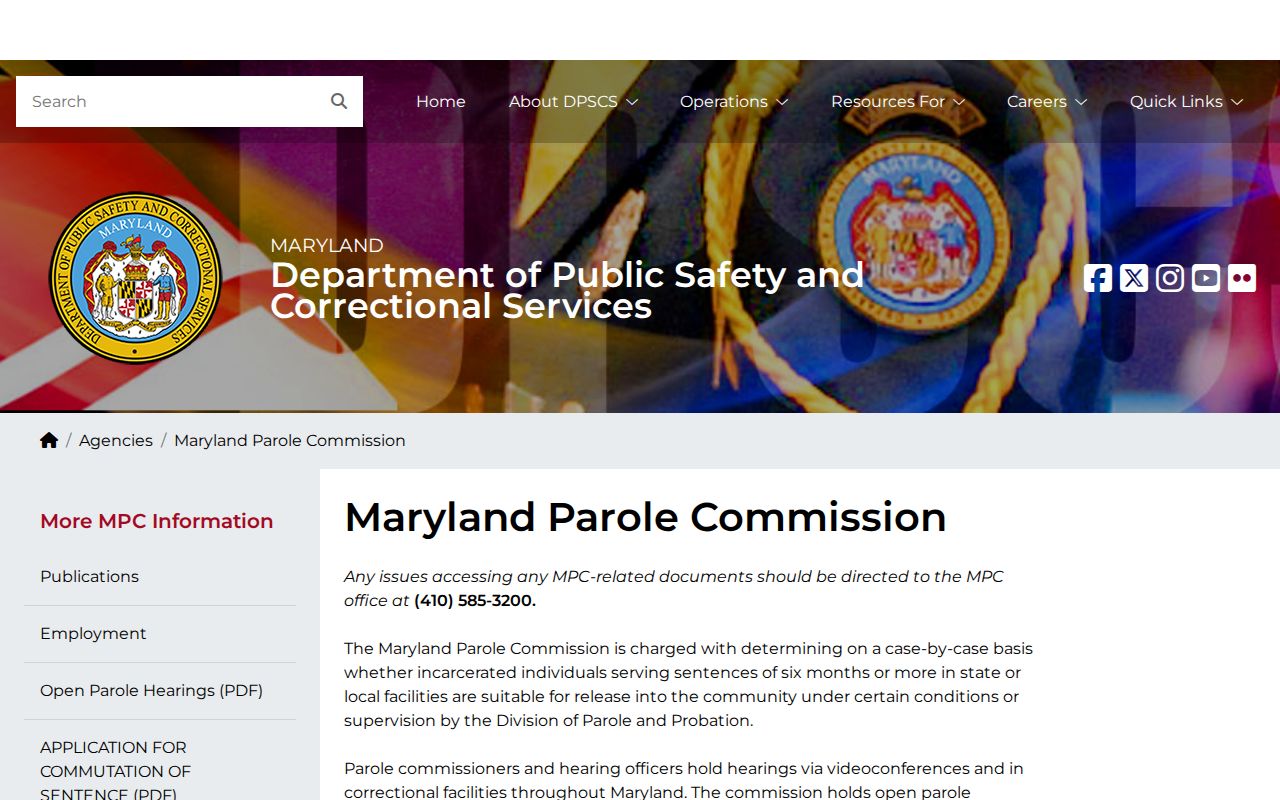
The agency page is the right starting point for current Commission contacts, while an executed release still requires a DPSCS custody record.
Property After a Somerset Transfer
A person leaving SCDC for Maryland state prison remains in custody. That event should not be described as parole or community release. The local property rule is still important for a family member or other trusted person helping after the transfer. The SCDC informational brochure says someone transferred to the Maryland Division of Correction has 30 days for another person to collect the property.
The person collecting it must show photo identification, and the brochure names Friday as pickup day. Property left beyond the stated period is disposed of under detention policy. Because facility rules can change, call SCDC before making the trip and confirm that the property is ready, what identification is accepted, and whether the published day still applies.
This rule also helps classify the custody event. A transfer from the Somerset County Detention Center to Eastern Correctional Institution is continued confinement under a different custodian. Any supervision starts only when a valid release path, such as parole or mandatory supervision, is executed.